Four Quotes I Love

“Doing missions when dying is gain is the happiest life in the world.” (John Piper)

“Laziness pretends to yearn for rest, but what sure rest is there except in the Lord? Luxury would gladly be called plenty and abundance, but You are the fullness and unfailing abundance of unfading joy. Promiscuity presents a show of liberality, but You are the most lavish giver of all things good. Covetousness desires to possess much, but You are already the possessor of all things. Envy contends that its aim is for excellence, but what is as excellent as You? Anger seeks revenge, but who avenges more justly than You? Fear shrinks back as sudden change threatens the way things are and fear is wary of its own security, but what can happen that is unfamiliar or sudden to You, O God? Or who can deprive You of what You love? Where is there unshaken security except with You? Grief longs for those delightful things we’ve lost because it wills to have nothing taken from it, just as nothing can be taken from You.” (Augustine, Confessions, Book 2)

“The reasoning of those who distort or suppress reality, or alter historical manuscripts to protect the delusions of the simple believer, is similar to that of the man who murders a child to protect him from a violent world.” (Frances Lee Menlove)

“Cast your whole vote, not a strip of paper merely, but your whole influence. A minority is powerless while it conforms to the majority; it is not even a minority then; but it is irresistible when it clogs by its whole weight.” (Henry David Thoreau)

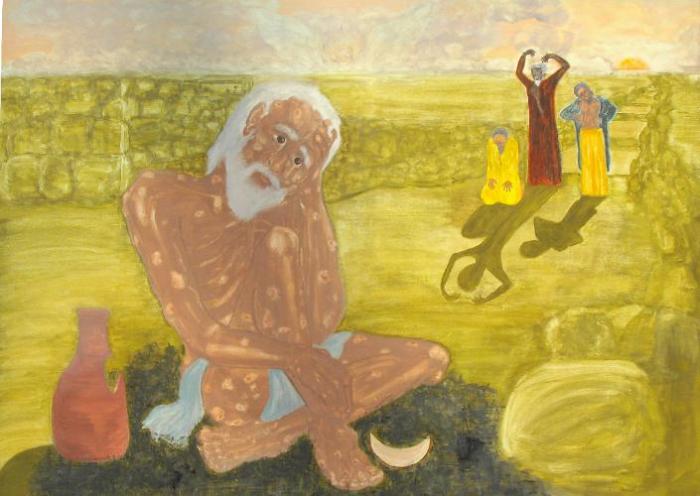
Does the Book of Job bring comfort?

suffering_job-705x500

The Book of Job puts its readers in the middle of an unresolved dialog with people struggling to understand, or claiming to understand, the reason for suffering.

“If [Job] is a theodicy, it raises the question without providing the expected answer. God’s response is that the answer is beyond the ken of men and women. Perhaps a better designation of the genre of the book is ‘wisdom debate.’ (Longman & Dillard, 232)

All the interlocutors, with the possible exception of Elihu, are rebuked for their misunderstanding, and God establishes himself as the true source of wisdom.

“The central message of the book is implied in the hymn to wisdom (chapter 28). Wisdom belongs ultimately to God (vv. 20–28), and all human attempts to grasp it or contain it are doomed to failure.” (Arnold & Beyer, 296)

In Romans, Paul says, “But who are you, O man, to answer back to God?” (9:20) Paul reminds us that God is the potter, and we are the clay. Notably, he doesn’t provide an actual, direct answer to the question in view (how can God find fault if we can’t ultimately resist his will? v. 19). Similarly, Job himself is never given an answer for the reason for his suffering.

“While God chooses not to reveal the answer to this question to his human creatures, we still learn much from this book about suffering. For instance, if we do not learn why we suffer, the book does disabuse one common belief, the so-called doctrine of retribution.” (Longman & Dillard, 234)

Specifically, we learn that retribution is not necessarily an accurate or sufficient explanation for *all* suffering. While it is generally true that sin leads to suffering, not all suffering is due to sin. The God whose invisible hand is behind suffering is bigger than retribution. Neither is he smaller than retribution. As with the man born blind spoken of in John 9, the suffering in view may be designed by God to display his glory in a non-retributive manner.

For these reasons I think of the Book of Job providing comfort like I think of Ecclesiastes providing meaning. They both remind us that God is ultimate, but both set up inadequate answers to the problems they address. At the very least they help a person feel like they are not alone — there have been others, even those of ancient times, who have struggled with the same sense of meaninglessness and unfairness. But God is still good, and ultimate, and wise. And we can simply trust him for that. God is God, and we are not. Let us put our hand over out mouth and worship.

But that was not the end. We can now read the Book of Job now canonically, within the wider scope of a Christ-centered canon.

Quoting Longman & Dillard (235–236):

“The story of the relationship between God and human suffering does not end with the book of Job. Job teaches that God is in control; he reprimands the innocent sufferer for questioning his wisdom and power. Job appropriately responded with repentance.

“The New Testament brings us to a deeper understanding of God’s dealings with suffering. In Jesus Christ he reveals his love toward his sinful creatures by sending his Son to die on the cross. Jesus Christ is the true innocent sufferer, the only one completely without sin. He voluntarily (as opposed to Job) submits himself to suffering for the benefit of sinful men and women. As Andersen (1976, 73) states it, “That the Lord himself has embraced and absorbed the undeserved consequences of evil is the final answer to Job and all the Jobs of humanity.” In Jesus, God enters into the world of human suffering in order to redeem humanity. Jesus experienced the height of human suffering on the cross, and he did so without complaining. The early Christian community saw the connection between Job and Jesus, so it was a common practice to read the book of Job during Passion week (Delitzsch 1975, 32).

“Jesus’ death on the cross did not bring suffering to an end. Indeed, Christians are characterized by their sharing in the sufferings of the Lord. To say that Christians are removed from the evil and pain of the present world on the basis of their conversion is a perversion of the gospel. In 2 Corinthians 1:3–11 Paul likens the suffering of Christians to that of Christ in order to communicate the comfort that is also available from Christ. It is interesting that he goes on to describe the Christian community as a fellowship of suffering and comfort.

“Thus the book of Job retains its power for contemporary Christians. It can now, however, be properly read only in the light of the suffering of the totally innocent sufferer, Jesus Christ.”

Sources

Arnold, B. T., & Beyer, B. E. (2008). Encountering the Old Testament: A Christian Survey (Second Edition) Grand Rapids, MI: Baker Academic.

Longman, T., III, & Dillard, R. B. (2007). An Introduction to the Old Testament (Second Edition.) Grand Rapids, Michigan: Zondervan.

Why John Calvin would have sparred with Ken Ham

“Moses describes the special use of this expanse, to divide the waters from the waters from which word arises a great difficulty. For it appears opposed to common sense, and quite incredible, that there should be waters above the heaven. Hence some resort to allegory, and philosophize concerning angels; but quite beside the purpose. For, to my mind, this is a certain principle, that nothing is here treated of but the visible form of the world. He who would learn astronomy, and other recondite arts, let him go elsewhere. Here the Spirit of God would teach all men without exception; and therefore what Gregory declares falsely and in vain respecting statues and pictures is truly applicable to the history of the creation, namely, that it is the book of the unlearned. The things, therefore, which he relates, serve as the garniture of that theater which he places before our eyes. Whence I conclude, that the waters here meant are such as the rude and unlearned may perceive.” (John Calvin, source)

Notice that Calvin here rejects *both* the concordist and metaphorical reading.

“God, I promise you nothing”

Vows to God with grandiose guarantees or penalties are “from the evil one.”

“But I say, do not make any vows! Do not say, ‘By heaven!’ because heaven is God’s throne. And do not say, ‘By the earth!’ because the earth is his footstool. And do not say, ‘By Jerusalem!’ for Jerusalem is the city of the great King. Do not even say, ‘By my head!’ for you can’t turn one hair white or black. Just say a simple, ‘Yes, I will,’ or ‘No, I won’t.’ Anything beyond this is from the evil one. (Matthew 5)

“God, I promise you nothing. Help me.” Jesus prefers that over temple vows.

Pro-life environmentalism

We should be pro-life for the same reason we should be environmentalists:

“‘Image of God’ also elevates humans above all other created things, indicating their responsibility to provide a benevolent and ethical stewardship over the rest of creation.” (Faith Study Bible)

The kind of environmentalism that values humans over fish and dogs. But still, an unabashed environmentalism and stewardship and care for the massive garden God has given us dominion over.

The same reason we have to keep the air and streams clean is the same reason we have not to unnecessarily and electively and singularly murder unborn human beings: we are in the image of God.

“I’m glad I wasn’t there”, says Jesus who weeps

Looking at the story of Lazarus, we see that we can’t dichotomize the broken-hearted love of Jesus and his intentional, sovereign allowance of tragedy.

Jesus is told in John 11:3 that Lazarus is ill. He responds by saying, “This isn’t fatal. It’s for the glory of God so that God’s Son can be glorified through it.” From this it seems Jesus is going to heal Lazarus. But the story takes a strange turn. John surprises us, “When he heard that Lazarus was ill, he stayed where he was.” (6)

He waits two days and decides then to go see Lazarus. He says he is going to “wake him up.” (11) From this his disciples assume Lazarus is in a deep sleep, but Jesus tells them, “Lazarus has died. For your sakes, I’m glad I wasn’t there so that you can believe. Let’s go to him.” (15)

As Jesus approaches the tomb, he began to cry. Some responded, “See how much he loved him!” Others, “He healed the eyes of the man born blind. Couldn’t he have kept Lazarus from dying?” (37) These latter folks assumed that, because Jesus had essentially allowed Lazarus to die, that he either didn’t love him or didn’t have the power to prevent his death.

Jesus comes to the tomb and is deeply disturbed. He chides Martha, “Didn’t I tell you that if you believe, you will see God’s glory?” (40) And then he brings Lazarus back to life by this effortless, awesome power of his word: “Lazarus, come out!” (43)

When Jesus heard that Lazarus was sick, he intentionally stayed where he was instead of promptly intervening. He even said, “I’m glad I wasn’t there.” Not out of cruelty, but out of gracious purpose. Lazarus died and Jesus not only allowed it, but in a deeper way intended it. Jesus had a bigger plan: “It’s for the glory of God so that God’s Son can be glorified through it.” God’s invisible hand is at work behind it all (Amos 3:6, Romans 8:28), and he weeps.

Humans: Deposed kings and queens

Humans: Deposed kings and queens. Glorious and miserable.

“What sort of freak then is man! How novel, how monstrous, how chaotic, how paradoxical, how prodigious! Judge of all things, feeble earthworm, repository of truth, sink of doubt and error, the glory and refuse of the universe!”- Blaise Pascal

“Man’s greatness and wretchedness are so evident that the true religion must necessarily teach us that there is in man some great principle of greatness and some great principle of wretchedness.” – Blaise Pascal

“Know then, proud man, what a paradox you are to yourself. Be humble, impotent reason! Be silent, feeble nature! Learn that man infinitely transcends man, hear from your master your true condition, which is unknown to you. Listen to God.”- Blaise Pascal

See also

Rhetorical flourish and the unsuitability of the King James Bible for modern readers

“I like the King James Bible because it translates the non-poetic bulk of the Bible very poetically.” In other words, you like the King James Bible because it doesn’t correctly translate (for modern readers) the literary device or genre of the original text.

If correct translation is more important than rhetorical flourish, and comprehensibility is more important then perpetuating a tradition, then buy your kids, teens, and neighbors a Bible that is in their modern language and reading level.