No to-do list condemnation in Christ

Stop using your to-do list as a self-condemning document.

There is therefore no to-do list condemnation in Christ Jesus. (cf. Romans 8:1)

It isn’t sacred. Add items you did to your to-do list. Your original plans were fallible.

You accomplished some things that weren’t originally on the list. Live with that.

Perhaps you are more productive than you think. Stop beating yourself up.

End of day: What did I accomplish by God’s grace?

Be gracious to yourself. Why? Because God is gracious toward you.

Are you abdicating basic responsibilities? Maybe. If so, repent. Get angry, and channel that anger toward action, not self-condemnation. But be slow to judge yourself and others.

Start the day with God’s grace – it is empowering. Then work with all the power that God is mightily and graciously working within you. Then end the day by resting in his grace.

“Believers are accepted through Christ, and thus their good works are also accepted in him. This acceptance does not mean our good works are completely blameless and irreproachable in God’s sight. Instead, God views them in his Son, and so he is pleased to accept and reward that which is sincere, even though it is accompanied by many weaknesses and imperfections. (Ephesians 1:6; 1 Peter 2:5; Matthew 25:21, 23; Hebrews 6:10)” (https://founders.org/library/1689-confession/chapter-16-good-works/)

This only applies to Christians – those who are completely and permanently forgiven in Christ. If you are not forgiven, then you are in rebellion. In this case you have far worse things to worry about than your to-do list failures or misplaced shame. And no to-do list success can fix that.

But for those in Christ:

“Therefore, since we have been justified by faith, we have peace with God through our Lord Jesus Christ. Through him we have also obtained access by faith into this grace in which we stand.” (Romans 5:1-2)

“There is therefore now no condemnation for those who are in Christ Jesus.” (Romans 8:1)

On the static potential of finite gods

A finite god that anticipates endless improvement is terribly static, immobilized, and boring.

Nearly all of his being is in a potential state, not yet actualized. Since this finite god’s improvement is never-ending, most of his potential will never be realized. Almost the entirety of this god is static or “slow”, not yet put to full use, and not yet up to speed.

As though watching a demigod toddler learning to walk, his worshippers clap and say, “But at least he’s getting better! He’s not completely still. And we can relate to his limitations.”

But the infinite God is completely actualized. None of himself is potentially better. His whole infinite being is active, both in the inner life of the Trinity, and in the love of his creation.

He isn’t bumping up his own limitations, having to stretch himself. He doesn’t need more gas in his fuel tank. He isn’t upgrading along the way.

Since he is entirely infinite, and all of his attributes coextensive, and completely perfect, the fullness of his perfection is active.

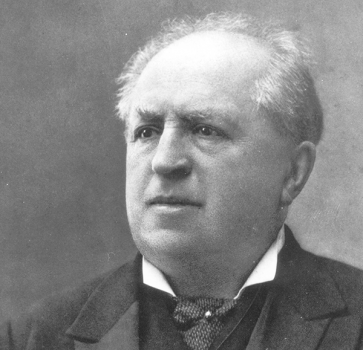
Abraham Kuyper on the Smallpox Vaccine

Reformed theologian Abraham Kuyper (1837-1920):

“The only question that is decisive is whether it achieves its goal. Aside from this, everyone is obligated, to apply it with all caution if it is effective, and to reject it if it is not effective.”

He leaves it up to parents:

“Research must continue to determine whether the harmful effects of the vaccination can be prevented with better treatment or more cautious application… On this point each one must decide for himself, and the father for his child, so that no one may coerce us against our will.”

He vehemently rejected vaccine mandates:

“For this reason alone, compulsory cowpox vaccination should be out of the question. Our physicians may be mistaken and government may never stamp a particular medical opinion as orthodox and therefore binding. Moreover, compulsion can never be justified until the illness manifests itself and may therefore never be prescribed as a preventative. A third reason is that government should keep its hands off our bodies. Fourthly, government must respect conscientious objections. In the fifth place, it is one or the other: either it does not itself believe in vaccination, or if it does, it will do redundant work by proceeding to protect once more those already safeguarded against an evil that will no longer have a hold on them anyway. Vaccination certificates will therefore have to go—and will be gone at least from our free schools. The form of tyranny hidden in these vaccination certificates is just as real a threat to the nation’s spiritual resources as a smallpox epidemic itself.” (“Our Program: A Christian Political Manifesto”)

But he says that it would be foolish and immoral to abstain from the vaccine if the evidence really does favor them:

“In the end everything comes down to the question of whether inoculation, or whatever other means, shows empirically that it reduces susceptibility to cowpox and also does not bring other serious damage to the body. This must be tested, researched, and determined experimentally. If the result of this research is unfavorable, it automatically falls by the wayside. But if the results of the research are favorable, then not only does nothing stand in the way of its application from the standpoint of faith, but it would be foolhardy—even immoral—not to apply a means that God has shown us for the protection of the life of our child. We are not advocating coercion on the part of the government.”

But again, he “[wishes] to lay it before the conscience of parents”, and encourages them to be informed:

“It stands to reason that God the Lord would have informed us directly about the nature of this terrible illness and also about the effective means to heal or prevent it.”

For perspective, 300 million people died of smallpox, and its fatality rate was quite different than COVID-19:

“During the 18th century the disease killed an estimated 400,000 Europeans each year, including five reigning monarchs, and was responsible for a third of all blindness. Between 20 and 60% of all those infected—and over 80% of infected children—died from the disease.” (Wikipedia)

Source of most quotes: Abraham Kuyper, “Common Grace“, vol 2. Series written 1902–1905. Contains two chapters on the ethics of vaccines. He favors vaccines in general and addresses ethical concerns that persist today.

On masks

teal and white underwear on gray textile

An April 2020 NatGeo article notes the social significance of masks:

  • They offer “sense of agency and control.”
  • They express communitarian solidarity.
  • They give one a “sense of contributing to the public good.”

The article is still relevant, as their social significance has cemented and increased. They function as a proxy or symbol now for a variety of political sensibilities.

At best, especially among those most convinced of their effectiveness, masks demonstrate neighbor-love. They are seen as a reasonable way to submit to government, express social solidarity, and show courtesy to others having a range of sensitivities and risk levels.

I can’t reliably judge random individuals over this – there are a lot of reasons a person might use a mask. But I would argue that masks also became an icon for the fear of death, a false sense of control, and acquiescence to communitarian excess.

There is another concern distinct from medical efficacy and cultural significance: natural impropriety. The face is designed to be the most visible, dignified center of attention and interpersonal communication. The face shines with a natural glory. To cover it is unnatural and requires an extenuating circumstance. It is, to some degree, dehumanizing, especially on children.

As those in the UK had to carry on during the German Blitz – maintaining a sense of life and normalcy worth saving – at some point we have to decide, with a moral calculus factoring in social significance and natural impropriety, that a mask mandate is unhealthy for the non-medical aspects of society.

On funding local pastors

Paul repeatedly insists that local pastors, particularly those devoted to preaching, be paid (1 Corinthians 9:9, 1 Timothy 5:18, Galatians 6:6). Yet he forgoes the right for himself, an apostle

Mormonism reverses this, paying its apostles and mission presidents, yet “muzzling the oxen”, the bishops, refusing to compensate those appointed as local leaders. This is unthinkable to Paul (1 Timothy 5:17). He simply assumes some of the local pastors will labor in preaching and teaching so intensely that it will be appropriate to compensate them.

The LDS Church has not here restored the normative original order of the early church. For Paul, to not pay one’s devoted pastor is not worth bragging about. Mormons “glory in their shame” and even violate their own scripture (D&C 42:71-73) when they boast about not paying their bishops. Not to pay one’s devoted shepherd is cause for embarrassment.

So if you want to “ex-Mormon even harder”, and double-down on actual new Testament Christianity, find yourself a church with a preacher that you want devoting his week to prayer and the word. And if your LDS friend accuses your pastor of gaining “filthy lucre”, cheerfully give even more. Fight against your flesh and against cynicism. Set aside an uncomfortable amount of money to give so that it stretches you. Unapologetically give to the general budget of the local church.

Aim to give your preaching pastor-shepherd a salary above the median income where he lives, so that he can buy a house for his wife, so his wife can stay home with the children, so that he can avoid being entangled in secular employment, and so that he can be hospitable and generous to others.

“It is hard to get good men to come to Utah”

“The bulk of the thousands who have abandoned Mormonism have not gone into our churches, but have settled into helpless indifference if not hopeless atheism…”

“It is hard to get good men to come to Utah. After coming, most of them leave at the first disappointment. WE NEED MEN HERE WITH THE SAME SETTLED CONVICTION THAT TAKES OTHERS TO THE FOREIGN FIELD—A CONVICTION THAT GOD HAS CALLED THEM TO THIS AS A LIFE WORK.

— Baptist missionary Bruce Kinney, “The Baptist Home Mission Monthly.” Vol XXIX, No. 3. March 1907. Emphasis original.

Independent Forms of Polity

Assuming the autonomy and independence of churches from outside interference or external governance, I see four forms of polity:

  • Elder-rule without consensus. Elders may build or assure consensus from congregation, but it is not principally and finally required. Pronouncements on major decisions made at the gathering may normally but not necessarily imply consensus between elders and congregation.
  • Elder-rule with consensus. Neither the majority of members nor the majority of elders can overrule the other on accepting/expunging members or elders. General consensus of some (at least implicit) kind is required. Voting on elders is common. Major decisions like adding new members don’t always require a congregational vote. The elders do not derive their authority from the congregation, but directly from Christ.
  • Elder-led congregationalism. Requires express vote for all major decisions (especially accepting/expunging members or elders). Sees the congregation as having final authority over the elders and delegating authority to the elders. Consensus between congregation and elders not principally required, but often practically secured if elders are normally the ones to bring matters to vote.
  • Strict congregationalism. Members can unilaterally both bring matters forward for vote and overrule elders. The church and even its elders are ruled by plurality of members and committees.

Worth a mention: Single-elder rule, deacon board rule, or a combination thereof.

Notes on Renihan’s “Edification and Beauty”

This book by James M. Renihan has arrested me for the past few weeks. It was riveting to hear how my Particular Baptist brothers, with a “primitivist urge to fulfill the dictates of Scripture”, “ransacked the pages of the Bible in order to establish their deeds with a heavenly authority.” (58)

I find myself largely at home with the Particular Baptists of the late 17th century, who themselves admired their Puritan brothers. Their ecclesiological retrieval is inspiring.

The book is a running commentary and synthesis of primary sources. Renihan ended each chapter with cogent summaries without rhetorical flourish.

Continue reading “Notes on Renihan’s “Edification and Beauty””

On recognizing our malleability

“Do not be deceived: ‘Bad company ruins good morals.’” (1 Corinthians 15:33)

What does it look like to be deceived here? It means to be in denial of how malleable and pliant and vulnerable we are to outside influence.

Knowing we are deeply open to outside influence, we are to strategize what we consume and who we surround ourselves with.

The coming resurrection and final judgment motivates us to be vigilant about this.

This also relates to a good conversation question:

What influences do you most enjoy? Who most shapes you?

Humble people are cognizant and clear about who that is.

The proud pretend they have none or are reluctant to admit who they are.

The naive assume they have or need none.

Wrapping up the semester at MBTS

Dr. Todd Chipman cheerfully shepherded us students through two semesters of elementary Greek. He prayed for us often and loved his students. He encouraged us to quietly use Greek as a humble foundation beneath our preaching.
Jared Wilson made us all want to finish seminary and go pastor. His books, “The Pastor’s Justification” and “Gospel-Driven Ministry”, were good for the soul.

He taught us to keep the gospel of ongoing central importance in our preaching, identity, and pursuit of personal transformation. His temperament, speech, and wisdom were imitable.

He had us read from Spurgeon’s “Lectures To My Students.” This is easily the most memorable reading I have done here so far.
Dr. Thor Madsen took us above the clouds and stayed at cruising altitude through large stretches of the New Testament for two memorable semesters. Stacia and I marveled at what we learned on our walks back home.
Continue reading “Wrapping up the semester at MBTS”