Ira Ransom’s evangelical sketches of Utah (1850-1950)

Ira Ransom’s Utah Christian evangelism observations on 1850-1950. Quoting “These Forty + Years”, published in 1999:

Shortly after the Mormons arrived in Utah, three denominational groups which were quite evangelical at the time (Presbyterians. Methodists, and the Baptists) began ministering in Utah. A number of Presbyterian churches were built in cities and towns such as Salt Lake City, Logan, Kaysville, Brigham City, Payson and other places. The Methodists and Presbyterians had an agreement that certain towns would be for the Presbyterians and others for the Methodists. Methodists built churches in Corinne. Tremonton, Price, and other places.

For a period of several months, [Fredrik] Fransen, the founder of The Evangelical Alliance Mission (TEAM), came to Utah and walked from home to home and farm to farm to minister to Mormons who had come from Scandinavian countries.

Early in the twentieth century, John Nutting, a Congregational minister, came to Utah to minister. He organized the Utah Gospel Mission. At first he came with a group traveling with covered wagons. He would go from town to town, and preach around camp fires and from the steps of various court houses. Later his mission groups traveled in model T trucks.

In 1929, George Cook came to Utah under Utah Gospel Mission. He later became a member of Utah Bible Mission and continued serving the Lord in Utah until his death.

In 1957, I talked with the Hansons in Brigham City who had heard John Nutting preach from the court house steps in Brigham City. Archie Yetter, of Rockmont College, told me in 1957 that he heard John Nutting pray near the end of his life that God would raise up someone to evangelize Utah.

One of the notable early Baptists serving in Utah was Rev. M. T. Lamb who, in 1887, wrote a book called THE GOLDEN BIBLE. It was a scholarly work analyzing the Book of Mormon. Reprints are available now through Utah Lighthouse Ministries.

About 1920, a Rev. Baynes established Bethel Baptist Church in Salt Lake City. In 1924, he drew quite a few Mormons to hear a special sermon which he preached on the subject “When Modernism Comes to Mormonism”. He was followed by his son, Rev. James Baynes who pastored the Bethel Baptist Church until about 1958 or perhaps 1960. Rev. James Baynes also started Anchor Baptist church, and Sandy Baptist Church (Which is pastored today by Wesley Clem). Rev. Baynes was active in the IFCA, and frequently attended the Regionals held in Colorado, and shared his burden for Utah with the men in the Rocky Mountain Regional. James Baynes passed away suddenly in 1963 and Thomas Miller succeeded him as pastor of Anchor Baptist Church.
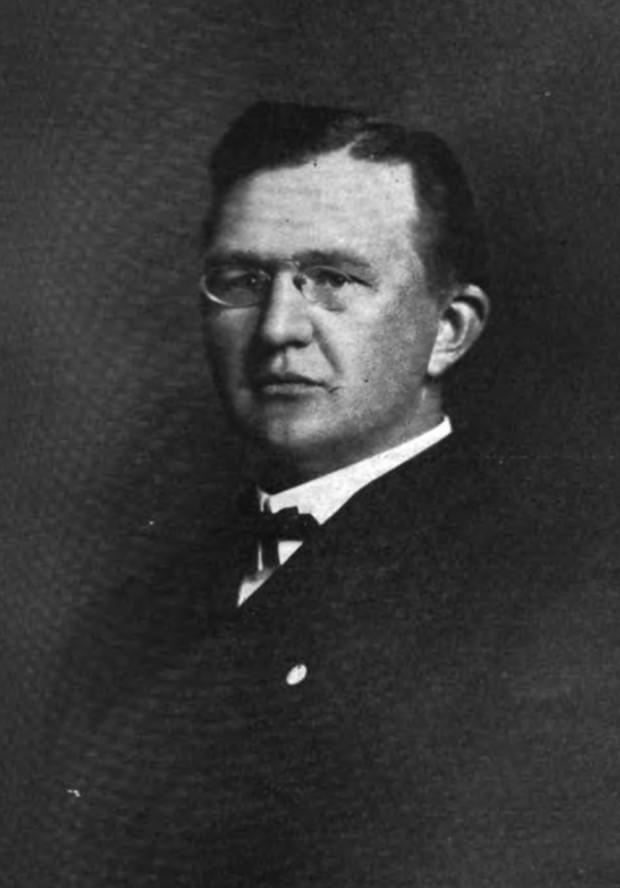
“It is hard to get good men to come to Utah”

“The bulk of the thousands who have abandoned Mormonism have not gone into our churches, but have settled into helpless indifference if not hopeless atheism…”

“It is hard to get good men to come to Utah. After coming, most of them leave at the first disappointment. WE NEED MEN HERE WITH THE SAME SETTLED CONVICTION THAT TAKES OTHERS TO THE FOREIGN FIELD—A CONVICTION THAT GOD HAS CALLED THEM TO THIS AS A LIFE WORK.

— Baptist missionary Bruce Kinney, “The Baptist Home Mission Monthly.” Vol XXIX, No. 3. March 1907. Emphasis original.

Independent Forms of Polity

Assuming the autonomy and independence of churches from outside interference or external governance, I see four forms of polity:

  • Elder-rule without consensus. Elders may build or assure consensus from congregation, but it is not principally and finally required. Pronouncements on major decisions made at the gathering may normally but not necessarily imply consensus between elders and congregation.
  • Elder-rule with consensus. Neither the majority of members nor the majority of elders can overrule the other on accepting/expunging members or elders. General consensus of some (at least implicit) kind is required. Voting on elders is common. Major decisions like adding new members don’t always require a congregational vote. The elders do not derive their authority from the congregation, but directly from Christ.
  • Elder-led congregationalism. Requires express vote for all major decisions (especially accepting/expunging members or elders). Sees the congregation as having final authority over the elders and delegating authority to the elders. Consensus between congregation and elders not principally required, but often practically secured if elders are normally the ones to bring matters to vote.
  • Strict congregationalism. Members can unilaterally both bring matters forward for vote and overrule elders. The church and even its elders are ruled by plurality of members and committees.

Worth a mention: Single-elder rule, deacon board rule, or a combination thereof.

Notes on Renihan’s “Edification and Beauty”

This book by James M. Renihan has arrested me for the past few weeks. It was riveting to hear how my Particular Baptist brothers, with a “primitivist urge to fulfill the dictates of Scripture”, “ransacked the pages of the Bible in order to establish their deeds with a heavenly authority.” (58)

I find myself largely at home with the Particular Baptists of the late 17th century, who themselves admired their Puritan brothers. Their ecclesiological retrieval is inspiring.

The book is a running commentary and synthesis of primary sources. Renihan ended each chapter with cogent summaries without rhetorical flourish.

Continue reading “Notes on Renihan’s “Edification and Beauty””

On recognizing our malleability

“Do not be deceived: ‘Bad company ruins good morals.’” (1 Corinthians 15:33)

What does it look like to be deceived here? It means to be in denial of how malleable and pliant and vulnerable we are to outside influence.

Knowing we are deeply open to outside influence, we are to strategize what we consume and who we surround ourselves with.

The coming resurrection and final judgment motivates us to be vigilant about this.

This also relates to a good conversation question:

What influences do you most enjoy? Who most shapes you?

Humble people are cognizant and clear about who that is.

The proud pretend they have none or are reluctant to admit who they are.

The naive assume they have or need none.

Wrapping up the semester at MBTS

Dr. Todd Chipman cheerfully shepherded us students through two semesters of elementary Greek. He prayed for us often and loved his students. He encouraged us to quietly use Greek as a humble foundation beneath our preaching.
Jared Wilson made us all want to finish seminary and go pastor. His books, “The Pastor’s Justification” and “Gospel-Driven Ministry”, were good for the soul.

He taught us to keep the gospel of ongoing central importance in our preaching, identity, and pursuit of personal transformation. His temperament, speech, and wisdom were imitable.

He had us read from Spurgeon’s “Lectures To My Students.” This is easily the most memorable reading I have done here so far.
Dr. Thor Madsen took us above the clouds and stayed at cruising altitude through large stretches of the New Testament for two memorable semesters. Stacia and I marveled at what we learned on our walks back home.
Continue reading “Wrapping up the semester at MBTS”

Close enough to practice forgiveness

How closely involved should you be with people in your church? Close enough to practice this:

“… with all humility and gentleness, with patience, bearing with one another in love, eager to maintain the unity of the Spirit in the bond of peace.” (Ephesians 4:2-3)

Staying detached, uninvolved, only spectating means you don’t have to forgive anyone, and no one has to forgive you.

Get close enough with others, and this starts happening among gospel-people:

“Be kind to one another, tenderhearted, forgiving one another, as God in Christ forgave you.” (Ephesians 4:32)

The blood of Christ is rich for this, friends.

Hear the gospel again and again

photo of herd of sheep

Older Christians with regrets need to hear the gospel again and again:

“Since therefore we have been justified by faith, we have peace with God through our Lord Jesus Christ… Christ died for the ungodly.” (Romans 5:1, 6)

“Not having a righteousness of my own that comes from the law, but that which comes through faith in Christ, the righteousness from God that depends on faith.” (Philippians 3:9)

Over and over.

It is how our Shepherd lays us down in green pastures and restores our troubled souls.

It is how our Friend continues to wash our dirty feet.

It is how our Gardiner keep us fruitful, abiding in the Vine.

It is how our High Priest provides absolution. You are forgiven.

It is how our King gives us victory.

It is how our Groom would have us return to our first love.

Jesus would have you be fruitful today, Christian. Do not be paralyzed by memories of failure or mid/late-life regret.

Revisit the gospel which never gets old or loses its relevance.

Hear the word, confess your sins, and look yet again to our mediator:

“My little children, I am writing these things to you so that you may not sin. But if anyone does sin, we have an advocate with the Father, Jesus Christ the righteous.” (1 John 2:1)

Israel’s expanded land promise

“As the years pass, God expands the land promise to extend beyond Canaan to eventually encompass the entire world.

“The first hint is the varying descriptions of the geographic boundaries of the Promised Land throughout the Pentateuch (cf., e.g., Genesis 15:18-21; Exodus 23:31-33; Numbers 34:1-12; Deuteronomy 1:7; 11:24; 34:1-4; Joshua 1:2-4). Such variety suggests the borders of the land are intended to expand as Israel dwells there and exercises dominion over it and the surrounding nations.

“A second indication is that God promised Abram descendants more numerous than the stars in the sky or the dust of the earth (Genesis 13:16; 15:5). Even allowing for the possibility of hyperbole, the sheer number of descendants envisioned seems to demand a larger territory than the land of Canaan.

“A third indication comes from Romans 4:13, where Paul asserts that God promised Abraham and his offspring that he “would be heir of the world.” The apostle, following the lead of the prophets, sees in nascent form a promise that encompassed all of creation. The frequent descriptions of the fertility and fecundity of the land portray it as a new Edenic Paradise where God’s original purposes for creation will be realized.”

Harmon, Matthew S.. Rebels and Exiles (Essential Studies in Biblical Theology) (p. 22). InterVarsity Press. Kindle Edition.


“No one proves more emphatically that he is giving a promised gift cheerfully than someone who gives more than his promise entails.” (Anselm)


“Though Eden was a concentrated specific area of the presence of God, it was indicative of the purpose of Earth… Thus, when there’s a specific area that is covenantally granted to Abraham, it [represents] the first step in a return to an Edenic state — a concentrated area of God’s dwelling place with man that will expand as man is ‘fruitful and multiplies.'”
– Bradley Campbell

Denying nature

man kissing woman's forehead

Like trying to smile with a full cup of water in your mouth.

Like trying to contain the smell of cooking bacon in the kitchen.

Like trying to eat a blue popsicle without coloring your lips or teeth.

Like trying not to laugh at an unexpected joke.

Like trying not to sweat when sprinting.

Like trying to hold a beach ball under water.

Like trying not to blush when you’re embarrassed.

Fighting God’s design in nature is an uphill battle. It takes reeducation and coercion and gaslighting.