
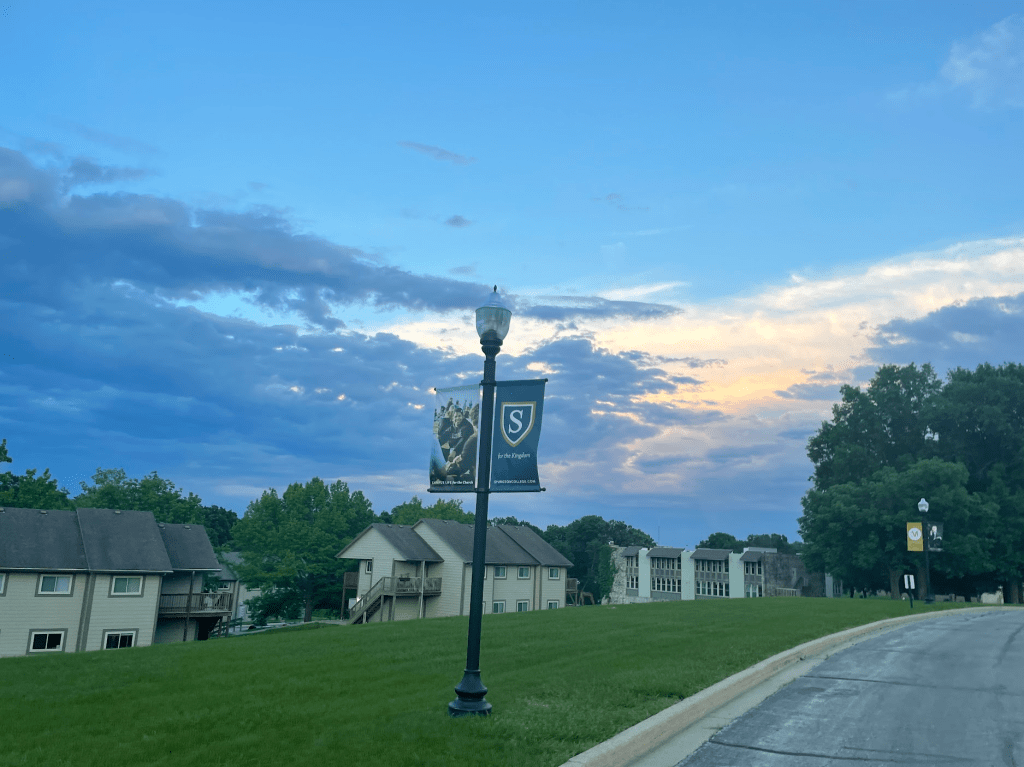
I love Utah. But all the changes with COVID provided me an opportunity. I was suddenly working from home. I reasoned: if I could work remotely, why not take evening classes at a seminary?
So I moved in 2020 to Kansas City, Missouri, to attend Midwestern Baptist Theological Seminary.
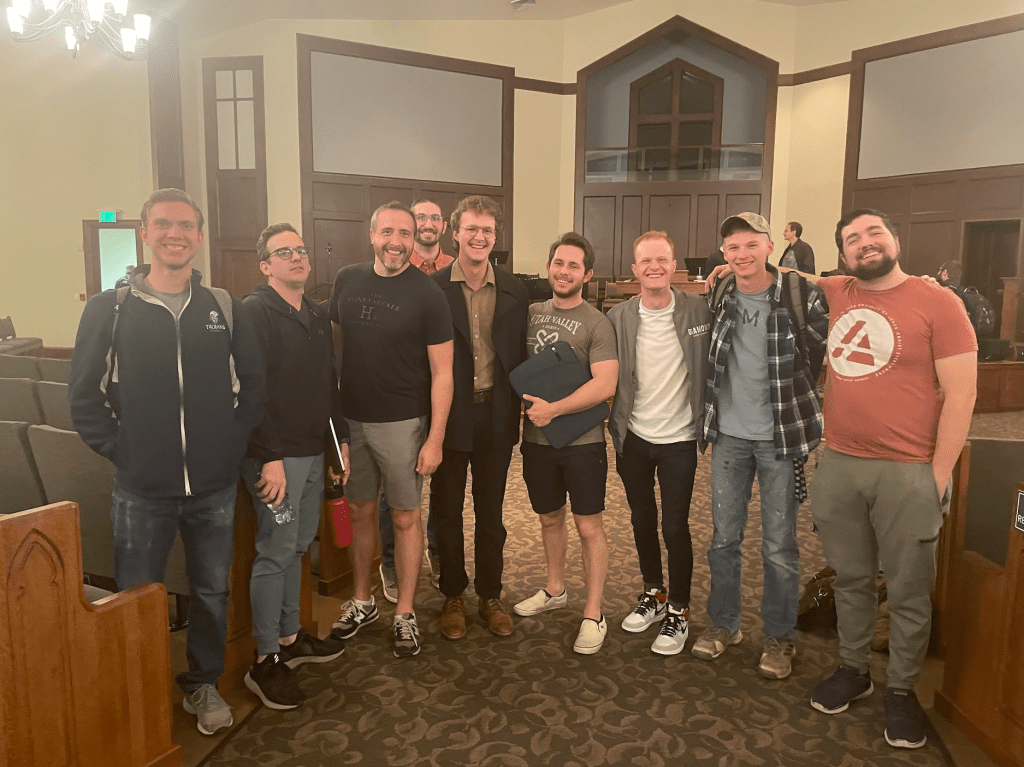
It has been a blessing. My daughters dash out the door in the morning to play with their campus friends. We now live on campus among believers and have made some dear friends.
I am moving back to Utah this July, and now I reflect on what God has taught me.
When I first moved here I asked a brother (Garrett) what advice he could give me for the seminary experience. He advised:
- Take the initiative to make relationships. More people than you realize are just waiting for others to take the initiative.
- Don’t murmur or complain. You might find yourself in a funk where this is tempting.
- Choose classes based on the professor, not the topic.
Here are some other things I picked up along the way:
- You don’t know what you don’t know. I am thankful that I was “forced” to read Charles Spurgeon, Gregory of Nazianzus, and William Wilberforce.
- Find a few good, humble friends. Oh, how thankful I am for Micah and Cale.
- Focus on the languages. I was only able to spend two years here, and the entire time I took classes on Greek. In my judgment, it was important that I take elementary Greek in-person rather than online.
- There are incalculable benefits to learning in community. These benefits are hard to describe or comprehend.
- Learn to read fast and slow. Some things are worth crawling through. Other things you can — guilt-free — breeze through.
- Talk to an advisor and avoid taking unnecessary classes. And think clearly about what degree you want first — you may want to pursue an MTS now and finish an MDiv later.
- Start your class readings before the semester begins. The end of the semester sneaks up on you.
- Appreciate the strengths of each professor. One professor might give incredible lectures, but doesn’t excel at Q&A. Another will give you unforgettable gems in class, but be disorganized or non-linear in his presentation. Another may model pastoral care for his students, but give quizzes that need corrections. Again, don’t murmur or complain. Be grateful. You’ll miss this.
- Don’t ask “interesting” questions in class for the first few weeks. If you’re easily excitable like me and have years of stored-up theological questions to ask your professors, hold off. Get a feel for how the professor works. Your question might be better suited for a private conversation.
- Make friends with residential PhD students. Buy them coffee and ask them all your questions. They can help take a load off of their professors.
- Prioritize your involvement in the local church. Join a small group. Become a member. Go to the membership meetings. Go to the socials. This matters more than seminary. You’re at seminary because the local church matters more than the seminary. Find a church with leadership, theology, preaching, and practical ecclesiology that you can imitate and export.
- Maintain your devotions, prayer life, etc. Your spiritual life matters more than your grades.
- Don’t overcommit. Your wife and kids need you.
- Provide for your wife; don’t delay marriage or having kids. Work a job and provide for your family. Pastors are supposed to manage their households well. You are preparing to be imitable by other men. Don’t send your wife away to be the primary provider while you study full-time and delay having children. Seeking a wife (actively and on purpose), starting a family, and having marketable skills with which to provide for a family is more important than getting a seminary degree in your early 20’s. Either you’re called to the celibate single life or you’re not.
- Be respectful of the institution and pray for the leadership. If you think things can be done a better way, send a private email to a relevant person. Then move on. The leadership at an institution likely has more information about the issue than you do. They have to balance more concerns than you have in mind. Pray for them.
- Visit some rural churches. The median SBC church has 70 in attendance. Cooperative associations can be a blessing to these churches. In times of need, a denomination can provide pulpit supply and a pool from which to hire a pastor. Not every church has a plurality of elders or stack of 9Marks books. There are faithful pastors doing patient and practical reformation, shepherding small flocks that they love.
- Befriend the missionaries on furlough. Sometimes they will live in seminary housing. Ask them about life overseas. It will give you perspective.
- Don’t judge the denomination by the worst of its public drama. Keep those rural churches, missionaries, and classmates in mind.
- The future of the SBC is bright if the people I encountered here are representative of the whole.¹ My campus neighbors, classmates, and professors were spectacular.
- Don’t judge a brother by his worst interactions on Twitter. You have the opportunity to get to know some brothers in person that you will regret having prematurely judged on social media.

- Spend time at the Student Center. You will make some providential relational connections that you didn’t plan for.
- Explore the library. I regret not doing this more substantially sooner. I will miss having access to our library.
- Search for existing dissertations on JSTOR and ProQuest. Your library may give you free access to these PDFs. These are often the basis of books later published.
- Learn to use Zotero or some other citation manager.
- Just use Google Docs. You don’t need to use Microsoft Word. Zotero has a plugin for Google Docs.
- Start a chat group with your classmates. We used Signal.
- Learn to use a text-to-speech app. You might need it when you’re having trouble focusing.
¹ Putting my cards on the table: I align with Founders Ministries.
 I Am Aaron Shafovaloff